Combining AI with your own abilities lets you refine your writing for better readability and SEO. This strategy ensures your content captivates readers and ranks well in search results.
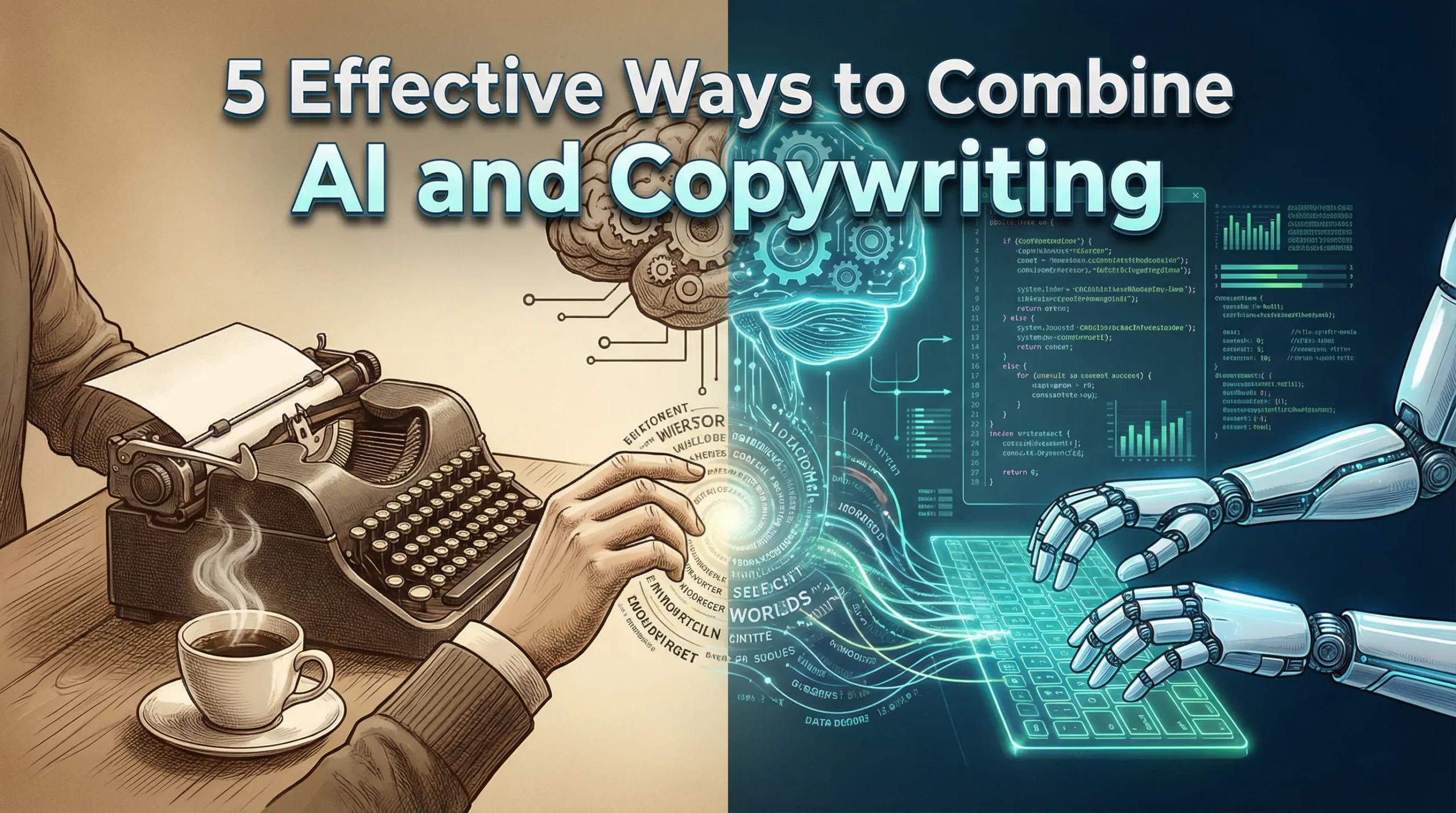
The fusion of copywriting and AI has revolutionized how you approach the art of crafting compelling messages. AI tools empower you to streamline the copywriting and AI process, enabling faster and more efficient content creation. For instance, 83% of professionals believe AI boosts productivity, while 59% credit it for enhancing creativity. These advancements allow you to focus on producing an original piece of content that resonates with your audience.
The relationship between human and artificial writing must be carefully maintained; AI-generated content often lacks the emotional depth and cultural nuances that skilled copywriters bring to the table. Combining the efficiency of AI with your creativity will help you create copy that feels genuine and engaging. Such a cooperative approach ensures AI augments your proficiency, thereby avoiding complete automation of the copywriting and AI processes.
While AI can assist with repetitive tasks, it cannot replace the unique touch of human-created content. Your ability to infuse emotion and originality into writing ensures that your copy stands out in a crowded digital landscape.
Use AI Copywriting Tools for Idea Generation
Overcoming Writer’s Block
Writer’s block can be a frustrating hurdle, especially when deadlines loom. AI copywriting tools offer a practical solutions to help you overcome this challenge. Tools like Copysmith and ChatGPT act as brainstorming partners, generating fresh ideas and refining your thoughts. For instance, Copysmith can suggest titles, subtopics, and even automate parts of your writing process. ChatGPT provides instant feedback and creative suggestions, helping you regain momentum when you feel stuck.
Notion AI is another valuable tool that organizes your ideas within a workspace, making it easier to structure your content. If you need help with phrasing, Wordtune offers real-time suggestions to enhance engagement.
Perplexity.ai takes it a step further by researching questions and providing credible sources, boosting your confidence in the accuracy of your content. These tools not only save time but also ensure your copy remains fresh and engaging.
Generating Engaging Headlines
Crafting compelling headlines is essential for capturing your audience’s attention. AI tools excel in this area by generating multiple headline options tailored to your content and audience. For example, Jasper AI and Copy.ai allow you to customize headlines to match your brand voice, ensuring consistency across your marketing materials.
Here are some examples of engaging headlines generated by AI tools:
|
Engaging Headlines Generated by AI Tools |
|---|
|
Unlock Your Marketing Potential with AI-Driven Strategies |
|
Discover the Future of Marketing: AI-Powered Insights |
|
Boost Your Engagement Rates with AI-Generated Content |
|
Unlocking the Secrets of AI: How Technology is Transforming Journalism |
|
The Future of News: AI Tools Every Journalist Should Know |
|
From Data to Headlines: The Role of AI in Modern Storytelling |
While AI tools can produce effective headlines, they do have limitations. These tools often rely on existing data patterns, which can result in predictable or generic outputs. Additionally, they may struggle to capture emotional nuances, a skill that skilled copywriters excel at. For best results, use AI-generated headlines as a foundation, and then modify them to include a personal style.
Leverage AI for Research and Audience Insights
Summarizing Complex Information
AI tools excel at breaking down complex information into concise, digestible summaries. This capability proves invaluable when you need to process large volumes of data quickly. For example, in healthcare, IBM Watson Health analyzes and summarizes medical records, enabling professionals to make informed decisions faster. Similarly, JPMorgan Chase’s COiN processes legal documents, reducing review time significantly.
In the legal field, Ross Intelligence helps lawyers by summarizing case law and statutes, saving hours of research.
These tools rely on advanced technologies like natural language processing (NLP) and machine learning (ML). NLP enables machines to understand human language, while ML improves summarization accuracy over time. Text mining and information retrieval systems further enhance this process by extracting insights from unstructured data. As a copywriter, you can use these tools to distill complex topics into clear, engaging content for your audience. This not only saves time but also ensures your copy remains accurate and authoritative.
Understanding Audience Preferences
Understanding your audience is crucial for creating impactful copy. AI tools provide valuable insights into audience preferences, trends, and behaviors by analyzing vast amounts of data. For instance, machine learning algorithms and NLP can identify patterns in web content, helping you tailor your messaging to resonate with your target audience. These tools also combine extensive content databases with advanced algorithms to generate human-like marketing copy, inspiring new ideas for your campaigns.
AI’s ability to generate personalized content at scale is another game-changer. AI can personalize messages by examining consumer data and understanding individual preferences. This ensures your ads and marketing materials connect with your audience on a deeper level. However, challenges like curating valid training data and integrating AI into existing systems can limit its effectiveness.
Despite these hurdles, AI remains a powerful ally for copywriters seeking to enhance creativity and precision in their work.
Streamline Content Drafting with AI
Creating First Drafts Efficiently
AI copywriting tools have revolutionized the way you approach first drafts. These tools can analyze existing content, conduct keyword research, and even suggest alternative phrases, making the drafting process faster and more efficient. For instance, tools like Jasper AI and Copy.ai can generate entire sections of content based on your input, reducing the time spent staring at a blank page. This allows you to focus on refining your ideas rather than struggling to start from scratch.
Using AI for first drafts also ensures consistency in messaging across your marketing channels. Whether you’re crafting ads, blog posts, or email campaigns, AI helps maintain a unified tone and style. Additionally, it minimizes errors and inconsistencies, saving you time during the editing phase.
However, relying too heavily on AI can undermine your creativity. While AI excels at streamlining processes, it cannot replace the unique perspective and emotional depth you bring to your writing. To maximize the benefits of AI, treat it as a collaborative partner rather than a replacement. Use it to overcome the initial hurdles of drafting, but always review and refine the output to ensure it aligns with your vision and resonates with your audience.
Experimenting with Different Writing Styles
AI offers a unique opportunity to experiment with various writing styles, enabling you to tailor your copy to different audiences and purposes. For example, you can use tools like ChatGPT to analyze and replicate specific styles. Start by providing a sample text and instructing the tool to extract its tone, vocabulary, and structure. Once the style is identified, you can apply it to your content or blend it with another style to create something entirely new.
Imagine crafting a blog post in the concise, impactful style of Ernest Hemingway or the narrative-driven approach of Malcolm Gladwell. AI allows you to explore these possibilities without extensive training or effort. This flexibility is particularly useful for copywriters who need to adapt their tone for different marketing campaigns or platforms.
However, AI-generated content often lacks personality, which can result in a generic feel. Proper A/B testing of prompts is essential to achieve the desired results. Experimenting with different styles requires patience and a willingness to refine the output. With AI and your expertise working together, you can craft outstanding copy that captivates your audience.
Refine and Optimize Copy with AI Assistance
Enhancing Grammar and Readability
AI tools have become indispensable for improving grammar and readability in copywriting. These tools analyze your content for errors and inconsistencies, ensuring a polished final product. For instance, Grammarly detects and corrects spelling mistakes, punctuation errors, and grammar issues. It also identifies overused words and incorrect verb tenses, saving you time on proofreading. This ensures your copy remains professional and error-free.
AI copywriting tools also enhance consistency across platforms. They eliminate grammatical errors and maintain uniform messaging, which is crucial for building trust with your audience. You can ensure clarity and professionalism by utilizing these tools for composing email subject lines or social media posts.
Using AI for grammar refinement doesn’t just save time—it elevates the quality of your writing. However, human oversight remains essential. AI-generated content can sometimes misinterpret context, so reviewing the output ensures it aligns with your brand voice and messaging.
Improving SEO with AI Copywriting Tools
AI has transformed how you approach SEO in copywriting. Tools like Data Cube and BrightEdge optimize your content for search engines by identifying high-performing keywords and refining elements like meta tags and page titles. This increases your visibility in search results and enhances content relevance. For example, AI-generated pages for competitive terms like “teknisk seo” have ranked on the first page of Google without penalties.
Similarly, Bankrate.com uses AI to create content for financial inquiries, driving significant traffic. These examples highlight how AI copywriting tools can deliver SEO-optimized headlines and impactful results. However, challenges exist. AI cannot fully replace human SEO expertise. It requires guidance to avoid missed opportunities or errors, such as incorrect backlinks. Additionally, AI’s knowledge cutoff date limits its ability to reference recent trends.
Despite these limitations, AI remains a powerful ally for creating high-quality copy that ranks well in search engines.
|
Tool |
Purpose |
Impact on SEO |
|---|---|---|
|
Data Cube |
Reveals keywords to target for organic traffic |
Increased visibility in search results |
|
BrightEdge |
Optimizes content elements like page titles and meta tags |
Enhanced content relevance |
|
Storybuilder |
Tracks impact of optimization on brand equity and revenue |
Improved brand recognition |
|
Keyword Reporting |
Monitors performance of keywords and content on pages |
Better content strategy |
Combining AI with your own abilities lets you refine your writing for better readability and SEO. This strategy ensures your content captivates readers and ranks well in search results.
Automate Repetitive Copywriting Tasks
Crafting Email Templates
AI tools have transformed the way you approach email marketing by automating the creation of email templates. These tools analyze customer data to generate personalized and engaging emails in minutes. For example, you can use AI to craft templates for newsletters, product launches, or even transactional emails like order confirmations. This automation not only saves time but also ensures consistency in tone and branding across all your communications.
Here are some examples of email templates that AI tools can generate:
-
Welcome emails to greet new subscribers.
-
Follow-up emails to re-engage potential customers.
-
Discount emails to promote special offers.
-
Event reminder emails to boost attendance.
AI-powered tools like Mailchimp and Constant Contact allow you to customize these templates further, tailoring them to your audience’s preferences. This level of personalization enhances engagement and increases the likelihood of conversions. However, while AI excels at efficiency, it may struggle with creativity. Adding a human touch to these templates ensures they feel authentic and resonate with your audience.
Generating Social Media Content
Social media platforms demand a constant stream of fresh and engaging content. AI tools simplify this process by automating tasks like post generation and scheduling. For instance, tools like Hootsuite and Buffer can create and schedule posts across multiple platforms, ensuring your messaging remains consistent. AI also helps monitor social media mentions to gauge audience sentiment. Mercedes-Benz, for example, used an AI tool to analyze over 200,000 mentions during a campaign. This allowed them to tailor their marketing strategy based on real-time emotional responses.
AI can create personalized user experiences by analyzing data from your followers. This enables you to craft posts that align with their interests, boosting engagement. While these tools offer significant time savings, they may lack the creativity needed for unique campaigns.
As a copywriter, you can use AI to handle repetitive tasks while focusing on crafting compelling and original content.
Combining AI with copywriting unlocks new possibilities for creativity and efficiency. You can use AI tools to overcome writer’s block, generate engaging headlines, and streamline content drafting. These tools also help refine grammar, optimize SEO, and automate repetitive tasks like crafting email templates or social media posts. However, human-created content remains essential for adding emotional depth and originality.
Explore AI tools to elevate your copywriting process, but remember that AI taking over copywriting entirely is not the goal. Instead, use AI as a partner to amplify your skills and create impactful content that stands out.