
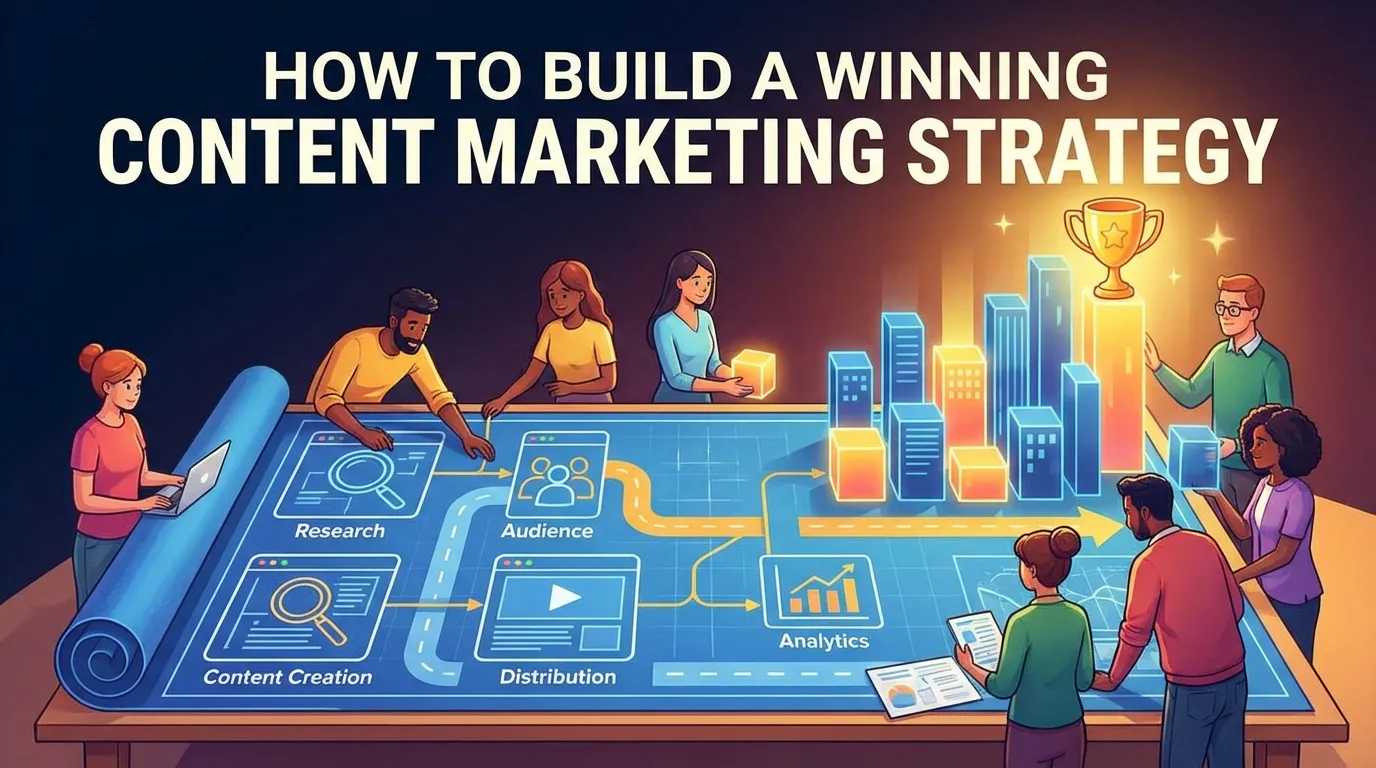
Imagine trying to sell ice cream in a snowstorm. Without a plan, your efforts might feel just as pointless. That’s where content marketing swoops in like a superhero. It gives your business a clear path to connect with your audience and achieve your goals. Did you know companies with blogs generate 67% more leads monthly than those without?
According to the statistics, a sound strategy is absolutely necessary, not just advantageous.
A structured approach to content marketing transforms your brand into a magnet for attention. It builds trust, sparks conversations, and keeps your audience coming back for more. From blog posts and videos to infographics, mastering content marketing can convert occasional visitors into lasting customers.
Ready to make your brand unforgettable? Let’s dive in!
What Is a Content Marketing Strategy and Why It Matters?
Definition of a Content Marketing Strategy
Think of a content marketing strategy as your brand’s GPS. It’s a strategic approach that helps you create and share valuable, relevant, and consistent content to attract and keep your ideal audience.
The ultimate goal?
To drive profitable customer actions. Your content, be it a helpful blog post or an entertaining video, needs to offer genuine value. Don’t just throw ideas out there; instead, create a strategic plan to convert casual visitors into dedicated followers.
Key Benefits of a Content Marketing Strategy
Builds brand awareness and authority
Imagine walking into a room where everyone knows your name. That’s the power of brand awareness. A well-executed content marketing strategy positions you as an expert in your field.
Sharing insightful blogs, engaging videos, or helpful infographics builds trust with your audience. People start to see you as the go-to source for information.
And trust?
It’s the secret sauce for long-term success.
Drives traffic and generates leads
Content marketing doesn’t just sit there looking pretty. It works hard to bring people to your website. Businesses that blog regularly see three times more leads than those that don’t. Plus, it’s 62% cheaper than traditional advertising.
That’s a win-win!
“Create valuable content, and you’ll draw in qualified leads who are actually interested in your offerings. Ditch the cold calling – let your content work for you.”
Enhances customer engagement and loyalty
Have you ever had that friend who always knows the perfect thing to say? Great content does the same for your brand. It keeps your audience interested and coming back for more.
From a funny meme on social media to an in-depth guide on your blog, consistent content builds a strong connection.
Over time, this connection turns into loyalty. And loyal customers? They’re worth their weight in gold.
Who Should Try Content Marketing?
Small businesses looking to grow their online presence
If you’re a small business owner, content marketing is your secret weapon. It levels the playing field, allowing you to compete with bigger brands. A well-thought-out strategy can help you reach a larger audience without breaking the bank.
Consistent content builds trust and attracts customers who might not have found you otherwise.
Enterprises aiming to maintain brand authority
Big brands need content marketing too. It’s not just about staying relevant; it’s about leading the conversation. Enterprises can use content to showcase their expertise, share industry insights, and maintain their position as thought leaders.
Freelancers and solopreneurs seeking to attract clients
Freelancers, listen up! Content marketing is your best friend. Sharing your knowledge through blogs, videos, or social media posts shows potential clients what you’re capable of. It’s like a digital portfolio that works 24/7.
Plus, it helps you stand out in a crowded market. The more value you provide, the more clients will come knocking.
Step-by-Step Guide: How to Content Marketing
Step 1: Set Clear Goals
Define your business objectives
Before diving into content creation, you need a clear destination. Think of your business objectives as the North Star guiding your efforts. Start by asking yourself, “What do I want to achieve?” Whether it’s boosting website traffic, increasing sales, or building brand awareness, your goals should be specific. Use the SMART criteria—Specific, Measurable, Achievable, Relevant, and Time-bound—to shape your objectives.
For example, instead of saying, “I want more leads,” aim for, “I want to generate 50 qualified leads per month within six months.” This clarity keeps your strategy laser-focused.
Align content goals with overall marketing goals
Your content marketing goals shouldn’t exist in a vacuum. They need to sync seamlessly with your broader marketing objectives. If your marketing team aims to grow email subscribers, your content should support that.
Create blog posts with lead magnets like free eBooks or webinars. If brand authority is the goal, focus on thought leadership content like whitepapers or case studies.
Aligning these goals ensures every piece of content serves a purpose and contributes to the bigger picture.
Step 2: Identify Your Target Audience
Conduct audience research
You can’t create content that resonates without knowing who you’re talking to. Audience research is your secret weapon. Start with surveys to gather broad insights. Dive deeper with interviews or focus groups to uncover specific pain points and preferences. Keep your research fresh by staying updated on trends and involving your team for diverse perspectives.
This isn’t a one-and-done task. Your audience evolves, and your research should too.
Create detailed buyer personas
Once you’ve gathered your data, it’s time to bring your audience to life. Buyer personas are fictional profiles that represent your ideal customers. Include details like demographics, goals, challenges, and even their favorite social media platforms.
For example, “Marketing Mary” might be a 35-year-old marketing manager who struggles with lead generation and loves LinkedIn. These personas help you tailor your content to meet their needs and solve their problems.
Step 3: Choose the Right Content Types
Blog posts, videos, infographics, etc.
Not all content is created equal. Different formats serve different purposes. Blog posts are perfect for in-depth exploration, while videos excel at storytelling. Infographics simplify complex data into digestible visuals. Podcasts and webinars engage audiences who prefer audio content.
A mix of these types keeps your strategy dynamic and appealing to various preferences.
Match content types to audience preferences
Your audience’s preferences should dictate your content choices. Use tools like HubSpot or Google Analytics to track engagement metrics. If your audience loves videos, double down on YouTube or Instagram Reels. If they prefer reading, focus on blogs and newsletters. Tailoring your content to their habits ensures higher engagement and builds loyalty.
Remember, it’s not about what you like; it’s about what they need.
Step 4: Create a Content Calendar
Plan content topics and publishing dates
A content calendar is your secret weapon for staying organized and consistent. Think of it as your brand’s personal assistant, keeping everything on track. Start by brainstorming topics that align with your content marketing plan. Use tools like Trello or Google Sheets to map out your ideas. Assign publishing dates to each topic, ensuring you cover key events, holidays, or product launches.
A well-planned calendar offers several perks:
-
Regular posting boosts your SEO game and keeps your audience engaged.
-
It provides a bird’s-eye view of your campaigns, helping you spot gaps or overlaps.
-
Deadlines become less daunting with a clear timeline in place.
With a content calendar, chaos turns into clarity. You’ll never scramble for last-minute ideas again.
Ensure consistency in posting
Consistency is the glue that holds your content strategy together. Posting sporadically confuses your audience and weakens your brand’s presence. Stick to a schedule that works for you, whether it’s weekly blog posts or daily Instagram updates. Use scheduling tools like Buffer or Hootsuite to automate your posts. This ensures your content reaches your audience at the right time, even when you’re busy.
Remember, consistency builds trust. When your audience knows when to expect your content, they’re more likely to stick around.
Step 5: Produce High-Quality Content
Focus on value and relevance
Creating high-quality content isn’t rocket science, but it does require effort. Start by understanding your audience’s needs and interests. What problems can you solve for them?
What questions do they have?
Tailor your content to address these points.
Here’s a quick checklist for crafting valuable content:
-
Relevance: Speak directly to your audience’s interests.
-
Informativeness: Offer solutions or insights they can’t find elsewhere.
-
Value: Make your content worth their time.
When your content resonates, your audience will keep coming back for more.
Optimize for SEO and readability
Great content deserves to be seen. That’s where SEO comes in. Use keywords naturally throughout your content to improve search engine rankings. Add multimedia elements like images or videos to make your content more engaging.
Internal and external links enhance credibility and keep readers exploring your site.
Don’t forget readability.
Break up text with headings, bullet points, and short paragraphs.
A clean layout makes your content easier to digest.
Step 6: Promote Your Content Effectively
Leverage social media platforms
Social media is your megaphone for spreading the word. Diversify your posts with how-tos, user-generated content, and live interactions. Use relevant hashtags to increase visibility. Post during peak activity times to maximize engagement.
Analytics tools like Sprout Social can help you refine your strategy.
Track what works and tweak what doesn’t.
Social media isn’t just about posting; it’s about building a community around your brand.
Use email marketing and partnerships
Email marketing is a powerhouse for promoting content. Personalized emails grab attention and drive traffic to your site. Segment your audience to send tailored campaigns.
For example, a newsletter with your latest blog post can re-engage dormant subscribers.
Partnerships amplify your reach. Collaborate with influencers or brands that share your audience. Cross-promotions introduce your content to new eyes, boosting visibility and credibility.
When done right, email and partnerships turn casual readers into loyal fans.
Step 7: Measure and Analyze Results
You’ve created amazing content, shared it with the world, and now you’re wondering—did it work? Measuring and analyzing results is the final piece of your content marketing puzzle.
This step ensures you’re not just throwing spaghetti at the wall but actually cooking up a recipe for success.
Track key performance indicators (KPIs)
KPIs are like the scoreboard of your content marketing game. They tell you what’s working and what’s not. But which ones should you focus on? Here’s a cheat sheet:
-
Organic Traffic: This shows how many visitors find your site through search engines. It’s a great way to gauge the effectiveness of your SEO efforts.
-
Backlinks: These are like votes of confidence from other websites. The more you have, the more credible your content appears.
-
Social Shares: If your content is getting shared, it’s resonating with your audience. This metric highlights engagement levels.
-
Click-Through Rate (CTR): This measures how often people click on your links. A high CTR means your content is compelling.
-
Bounce Rate: A high bounce rate means visitors leave without interacting. Lowering this number indicates better engagement.
-
Average Time on Page: The longer visitors stay, the more engaging your content is.
-
Conversion Rate: This is the ultimate goal—turning visitors into customers.
-
Scroll Depth: This shows how far down the page people scroll. It’s a great way to see if your content keeps them hooked.
Tracking these KPIs gives you a clear picture of your content’s performance. It’s like having a GPS for your strategy, guiding you toward your goals.
Use analytics tools to refine your strategy
Once you’ve got your KPIs, it’s time to dig deeper. Analytics tools are your secret weapon for turning raw data into actionable insights. Here’s a quick comparison of some top tools:
|
Tool Name |
Features |
Pricing |
Best For |
|---|---|---|---|
|
Integrates with 90+ platforms, pulls data automatically, customizable templates |
Custom pricing |
Those who want all their data in the Google suite |
|
|
SE Ranking |
Competitor analysis tools, mobile app support, budget-friendly pricing |
Essential: $55/month, Pro: $109/month, Business: $239/month |
Budget-conscious businesses managing SEO |
|
BuzzSumo |
Content performance analytics, influencer search, brand monitoring |
Content Creation: $199/month, PR & Comms: $299/month, Suite: $499/month, Enterprise: $999/month |
Finding trending topics |
|
Databox |
Custom dashboards, performance data integration, premade templates |
Free Plan: $0/month, Starter: $59/month, Professional: $169/month, Growth: $399/month, Premium: $999/month |
Bringing all your data under one roof |
These tools help you identify what’s working and what needs tweaking. For example, if your bounce rate is high, you might need to improve your content’s relevance or readability.
If your organic traffic is low, it’s time to revisit your SEO strategy.
Refining your strategy isn’t a one-time task. It’s an ongoing process that keeps your content marketing efforts sharp and effective. Think of it as fine-tuning a musical instrument. The better you adjust, the sweeter the results.
Common Mistakes to Avoid in Content Marketing
Even the best intentions can lead to missteps. Content marketing is no exception. Avoiding common mistakes can save you time, resources, and a lot of frustration. Let’s dive into three pitfalls you should steer clear of.
Not Defining Clear Goals
Imagine setting out on a road trip without a destination. You’d drive aimlessly, wasting gas and time. The same applies to content marketing. Without clear goals, your efforts lack direction.
You might create amazing content, but how will you know if it’s working?
Set specific, measurable objectives.
Want more website traffic? Aim for a 20% increase in three months.
Hoping to generate leads? Target 50 new sign-ups per month.
Goals give your strategy purpose and make success measurable.
Ignoring Audience Research
Picture this: You’re throwing a party, but you don’t know what your guests like. You serve sushi to a crowd that prefers pizza. That’s what happens when you skip audience research in content marketing.
When businesses fail to conduct audience research, they risk creating content that lacks value and relevance for potential customers. This can lead to disengagement, as the content may not address the customers’ needs or interests. F
or instance, focusing solely on company updates rather than customer-centric topics can quickly alienate the audience, resulting in ineffective marketing strategies.
Take the time to understand your audience. What are their pain points? What questions do they need answered? Use surveys, interviews, and analytics to gather insights.
Tailor your content to their needs, and you’ll see engagement soar.
Focusing on Quantity Over Quality
More isn’t always better. Churning out endless content might seem like a good idea, but it often backfires.
-
Producing a high volume of low-quality content can lead to a lack of engagement from the target audience.
-
A poor customer experience can negatively impact long-term business growth.
-
High-volume content may not help a brand stand out in a crowded market.
-
Low-quality content is less likely to be shared, wasting time and resources.
It’s more beneficial to publish one truly excellent post per week than to release five mediocre posts weekly. High-quality content builds trust and keeps your audience coming back for more.
Focus on creating value, not just filling up your blog.
Avoiding these mistakes can transform your content marketing strategy from mediocre to magnificent. Stay focused, know your audience, and prioritize quality over quantity.
Your efforts will pay off in the form of loyal followers and measurable results.
Neglecting Content Promotion
Creating amazing content is only half the battle. If you don’t promote it, it’s like throwing a party and forgetting to send out invitations. Your audience won’t know your content exists unless you actively share it. This is where many marketers stumble. They focus so much on creation that they neglect the crucial step of promotion.
Think of content promotion as the megaphone for your content marketing efforts. Social media platforms, email campaigns, and collaborations with influencers amplify your reach.
For example, sharing a blog post on LinkedIn can attract professionals, while Instagram Stories might engage a younger audience. Each platform has its unique strengths. Use them wisely to connect with your target audience.
Here’s a quick checklist to ensure your promotion game is strong:
-
Share your content on at least three social media platforms.
-
Use email newsletters to keep your subscribers in the loop.
-
Collaborate with industry influencers to expand your reach.
-
Repurpose content into different formats, like turning a blog into a video.
Promotion doesn’t stop at social media. Engage with your audience by responding to comments and joining discussions. This builds relationships and keeps your brand top of mind.
Remember, even the best content won’t shine if it stays hidden.
Failing to Measure Results
Imagine baking a cake without tasting it. You wouldn’t know if it’s delicious or a disaster. The same applies to content marketing. If you don’t measure results, you’ll never know if your strategy works.
Many marketers skip this step, leaving them in the dark about their performance.
Tracking metrics helps you understand what resonates with your audience. Tools like Google Analytics or HubSpot provide insights into traffic, engagement, and conversions.
For instance, if a blog post has a high bounce rate, it might need better visuals or a stronger call-to-action. Data-driven decisions improve your strategy over time.
Here’s a table of key metrics to track and why they matter:
|
Metric |
What It Measures |
Why It’s Important |
|---|---|---|
|
Organic Traffic |
Visitors from search engines |
Shows SEO effectiveness |
|
Social Shares |
Content shared on social platforms |
Indicates audience engagement |
|
Conversion Rate |
Visitors taking desired actions |
Measures content’s impact on goals |
|
Average Time on Page |
Time spent on a page |
Reflects content relevance and quality |
Set clear goals for each piece of content. For example, aim for a 10% increase in social shares or a 5% boost in email sign-ups. Regularly review your metrics to identify trends and adjust your approach. Measuring results isn’t just about numbers. It’s about understanding your audience and refining your strategy for success.
Examples of Successful Content Marketing Strategies
Case Study 1: HubSpot’s Blog Strategy
HubSpot’s blog strategy is a masterclass in content marketing. They’ve turned their blog into a lead-generating machine, and you can do the same. HubSpot focuses on creating educational, actionable, and SEO-optimized content that solves real problems for their audience.
Their blog isn’t just a collection of random posts—it’s a well-oiled engine driving traffic and conversions.
Here’s what you can learn from HubSpot’s approach:
|
Key Insight |
Actionable Takeaway |
|---|---|
|
Businesses that blog average 55% more website visitors than those that don’t. |
Start a blog or increase your posting frequency to attract more visitors. |
|
Companies with 30 or more landing pages generate 7x more leads than those with fewer than 10. |
Create multiple landing pages tailored to different offers or audience segments. |
|
91% of online adults use social media regularly. |
Strengthen your social media strategy to engage potential customers. |
|
The click-through rate on triggered email messages is 119% higher than regular email messages. |
Use personalized email campaigns to boost engagement and conversions. |
HubSpot’s success proves that consistent, high-quality blogging can transform your brand into an authority in your industry. It’s not just about writing—it’s about writing with purpose.
Case Study 2: Dollar Shave Club’s Viral Video Campaign
Dollar Shave Club didn’t just sell razors—they sold a lifestyle. Their viral video campaign became a textbook example of how humor and relatability can skyrocket a brand. The video racked up 4.75 million views in just three months and now boasts over 27 million views.
That’s the power of content marketing done right.
What made this campaign so effective? First, the video spoke directly to the audience’s pain points—expensive razors and unnecessary features. It used humor to connect, making the brand memorable.
Second, Dollar Shave Club stayed true to their witty, no-nonsense brand voice. This consistency, as noted by their executive creative director, has been key to their ongoing success.
The takeaway? Be bold. Use humor or storytelling to make your content stand out. And always stay true to your brand’s voice.
People don’t just buy products—they buy into the personality behind them.
Case Study 3: Airbnb’s Social Media Content Plan
Airbnb’s social media strategy is a love letter to its community. They’ve mastered the art of turning user-generated content into a marketing powerhouse. Their approach isn’t just about showcasing properties—it’s about telling stories.
Here’s how Airbnb’s strategy shines:
-
A picturesque Airbnb in the Swiss Alps encouraged guests to share their hiking adventures and cozy evenings by the fire using a specific hashtag. These real-life stories boosted interest and bookings.
-
Airbnb’s community-driven approach fosters a sense of belonging. This emotional connection translates into brand loyalty.
-
An eco-friendly Airbnb in Costa Rica partnered with a travel influencer. The influencer’s posts reached millions, aligning Airbnb with sustainability values and increasing bookings.
Airbnb’s success lies in its ability to make customers the heroes of their story. When you involve your audience, you create a sense of ownership and loyalty that no ad campaign can replicate.
These case studies show that content marketing isn’t one-size-fits-all. Whether you’re blogging, creating videos, or leveraging social media, the key is to connect with your audience in a way that feels authentic and valuable.
A clear and actionable content marketing strategy is your roadmap to success. It helps you generate leads, boost organic traffic, and increase brand awareness. With tools like customer personas and a customer journey map, you can create content that resonates and drives results. Consistency and creativity are your secret weapons.
Regularly producing valuable content keeps your audience engaged and builds trust. Measuring performance ensures you stay on track and refine your approach.
FAQ
What is the first step in creating a content marketing strategy?
Start by setting clear goals. Decide what you want to achieve—more traffic, leads, or brand awareness. Use the SMART framework (Specific, Measurable, Achievable, Relevant, Time-bound) to define your objectives. Clear goals keep your strategy focused and effective.
How often should I post content?
Consistency matters more than frequency. Post as often as you can maintain quality. For most businesses, 1-2 blog posts per week or 3-5 social media updates daily works well. Stick to a schedule your audience can rely on.
Which content type works best for beginners?
Blog posts are a great starting point. They’re easy to create and excellent for SEO. Once you’re comfortable, experiment with videos, infographics, or podcasts. Choose formats that align with your audience’s preferences and your team’s skills.
How do I know if my content is working?
Track key performance indicators (KPIs) like organic traffic, social shares, and conversion rates. Use tools like Google Analytics to measure success. If your numbers improve over time, your content is hitting the mark.
Can I do content marketing without a big budget?
Absolutely! Start small with free tools like Canva for design or WordPress for blogging. Focus on high-value content that solves problems for your audience. Consistency and creativity can outperform big budgets.
How do I find content ideas?
Use tools like BuzzSumo or AnswerThePublic to discover trending topics. Check your competitors’ blogs for inspiration. Ask your audience directly through polls or surveys. Their questions and challenges make excellent content.
Should I focus on SEO or social media for promotion?
Both! SEO drives long-term traffic, while social media creates immediate engagement. Optimize your content for search engines and share it across platforms like Instagram, LinkedIn, or Twitter. A balanced approach works best.
What’s the biggest mistake to avoid in content marketing?
Don’t ignore your audience. Skipping audience research leads to irrelevant content. Always create with your readers in mind. Understand their needs, preferences, and pain points to keep them engaged and loyal.