
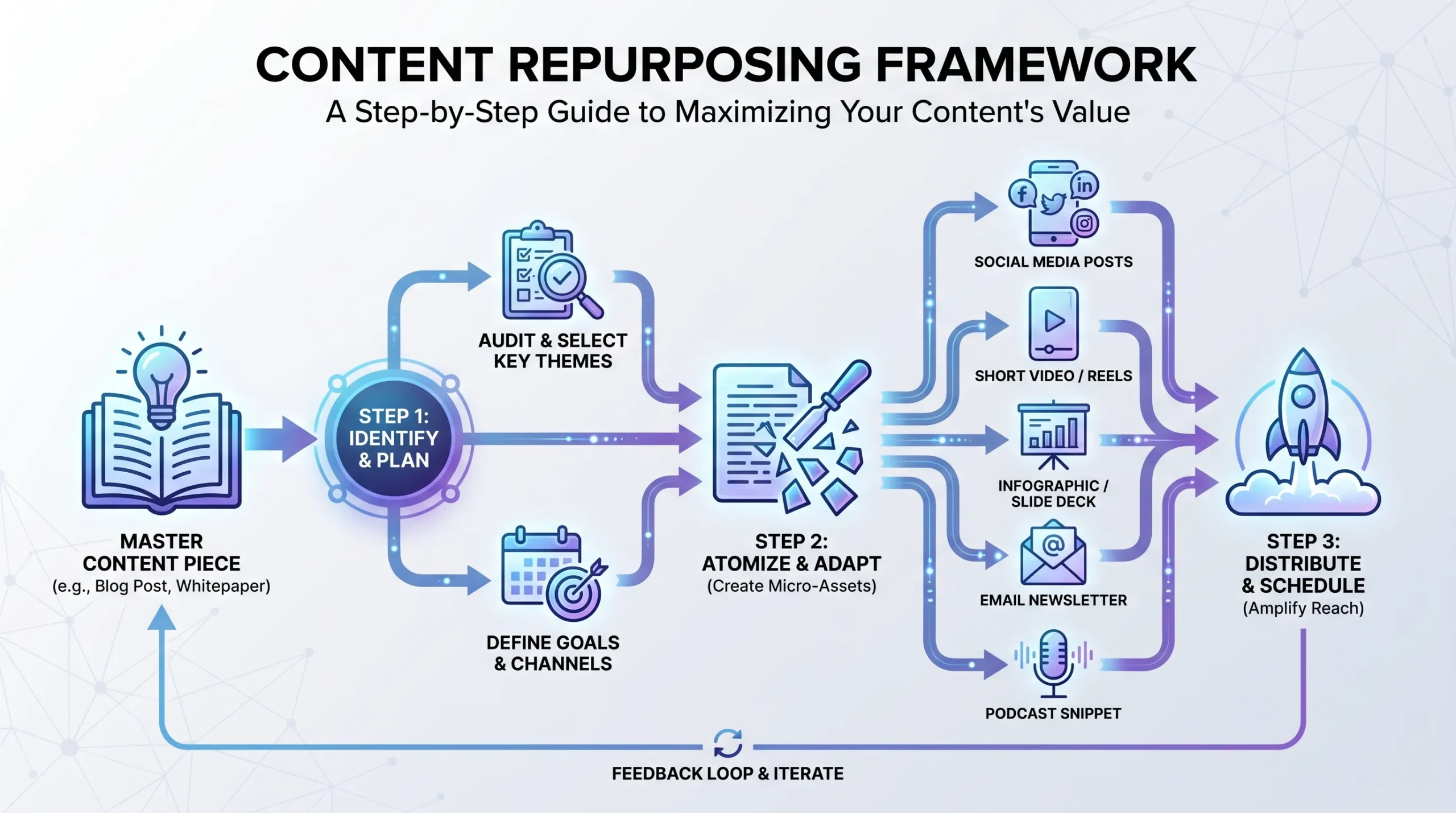
If you want to maximize your marketing efforts, you need a content repurposing framework. This approach lets you create once, distribute everywhere, and reach more people without starting from scratch each time. You can turn one piece of content into many forms, making your strategy more efficient and powerful.
-
Algorithms now reward content that sparks reactions like shares or comments, not just high quality.
-
Marketers who design content to provoke curiosity and engagement see better results.
-
When you focus on what your audience will do with your content, you increase its reach.
B2B marketers benefit most from this mindset. You get more value from every piece of content and can reach your audience on multiple platforms. A strong content repurposing framework helps you work smarter and achieve greater impact.
Key Takeaways
-
A content repurposing framework allows you to create once and distribute everywhere, maximizing your marketing efforts.
-
Understanding your audience is crucial. Tailor content formats to their preferences to increase engagement and reach.
-
Regularly audit your existing content to identify high-performing pieces that can be repurposed for different platforms.
-
Use templates and automation tools to streamline your content repurposing process, saving time and maintaining consistency.
-
Measure the performance of your repurposed content to refine your strategy and ensure it aligns with your business goals.
Content Repurposing Framework Overview
What Is Content Repurposing
You can define content repurposing as a strategic method that extends the life and value of your content. Leading organizations use this approach to modify existing content for different contexts or target audiences. You transform a single core idea into multiple assets, such as blog posts, videos, infographics, or emails. This process saves time and resources while optimizing your marketing investments. You ensure that your content serves multiple purposes beyond its original intent.
For example, you might distill a high-performing blog post into a concise email or turn webinar Q&A sessions into social media snippets. This strategy helps you address audience needs without starting from scratch.
Why a Framework Matters
A content repurposing framework gives you structure and consistency. You avoid content bottlenecks and meet deadlines without sacrificing quality. You focus on higher-leverage activities instead of constantly creating new material. Different audiences prefer different formats, so repurposing ensures your content reaches diverse platforms and increases engagement. You build a content ecosystem that enhances topical depth and interconnectivity.
You revitalize older, high-performing content, driving fresh traffic and reducing content decay. Repurposing helps you dominate more search surfaces with less effort, boosting SEO effectiveness. Teams that use a repurposing framework see significant growth in organic traffic and branded searches.
Tip: Use templates and workflow automation to maintain efficiency and consistency in your content repurposing framework.
|
Key Component |
Description |
|---|---|
|
Audit Your Content |
Review existing content to identify high-performing pieces that can be repurposed. |
|
Know Your Audience |
Understand the preferences of different audience segments to tailor content effectively. |
|
Optimize for Each Platform |
Adapt content style and format to fit the unique characteristics of each platform. |
|
Measure and Refine |
Track performance metrics to continuously improve the repurposing strategy based on audience engagement. |
You start by auditing your content to find top-performing and evergreen pieces. Audience mapping helps you tailor formats to different channels. Templates and automation streamline your workflow. When you implement a content repurposing framework, you multiply your reach and maximize the value of every content asset.
Audit and Align Content Goals
Content Audit Steps
A successful content repurposing framework starts with a thorough audit. You need to know what you have before you can decide what to repurpose. Begin by defining the scope and goals of your audit. Set clear objectives, such as improving SEO or removing outdated content. Build a team with different skills to ensure a complete review. Use tools to create an inventory of all your content assets, including URLs and metadata.
Next, set assessment criteria. Focus on SEO performance, content quality, and engagement metrics. Document your findings and turn them into action items.
Group your content into categories like “update,” “repurpose,” or “retire.” This process helps you see which pieces perform well and which need improvement. A content audit reveals what resonates with your audience and what does not. It also uncovers gaps, so you can address unanswered questions and build a stronger strategy.
Setting Repurposing Goals
Aligning your content goals with business objectives ensures every piece serves a strategic purpose. When you set clear goals, you make it easier to measure success and refine your approach. Start by identifying key performance indicators. These might include website traffic, user engagement, lead generation, conversions, or quality backlinks.
Successful companies use transparent measurement and regular reporting to optimize their content repurposing efforts. They track data and adjust strategies, which leads to more organic traffic and qualified leads. By following these steps, you create a strong foundation for your content repurposing framework. You maximize the value of your existing content and set yourself up for long-term success.
Audience and Platform Analysis
Understanding Your Audience
You need to understand your audience before you start content repurposing. Analyze demographic and behavioral data to identify who interacts with your content and how they behave. Use intent signals to track actions such as repeat visits to product pages or engagement with competitor content. Segment your audience by behavior, grouping users based on activities like cart abandonment or email opens.
Adjust your retargeting strategy to keep ads relevant and helpful. This approach helps you tailor repurposing efforts to match audience needs.
|
Aspect |
Description |
|---|---|
|
Intent Signals |
Track actions like repeat visits to product pages or engagement with competitor content to identify potential buyers. |
|
Segmentation by Behavior |
Group audiences based on activities such as cart abandonment or email opens to tailor relevant ads. |
|
Retargeting Strategy Adjustments |
Set frequency limits and update ad creatives to ensure ads remain relevant and helpful to users. |
You gain valuable insights by studying these aspects. You can create content that speaks directly to your audience and increases engagement. When you understand your audience, you make smarter decisions about repurposing and distribution.
Choosing Distribution Channels
Selecting the right distribution channels is essential for successful content repurposing. You must match your content formats to the platforms where your audience spends time. In B2B marketing, you can transform a whitepaper into a LinkedIn infographic or carousel post. You can create a blog post series that offers deeper insights from the original content. Develop a video script for YouTube walkthroughs based on the whitepaper. Extract snippets for email nurture campaigns.
-
Repurpose long-form content into bite-sized insights for social media.
-
Break down a blog post into a Twitter thread.
-
Share short clips from podcasts on LinkedIn.
-
Convert reports into infographics for social media sharing.
-
Use case studies as topics for podcast episodes.
-
Compile related blog posts into a comprehensive guide.
You increase your reach by adapting content for each channel. You make your repurposing strategy more effective and ensure your content delivers value across platforms. This process helps you maximize the impact of every content asset.
Content Repurposing Strategies
Selecting Formats
You need to choose the right formats to make your content work harder and reach more people. Start by thinking about your audience’s preferences and the platforms they use most. Each platform has strengths, so you should adapt your content to fit those strengths. For example, short-form videos grab attention on social media, while infographics make complex data easy to understand.
Image carousels and interactive content, such as polls or surveys, encourage users to engage with your message.
Marketers often categorize content by its purpose. Product-led content, like demos or competitor comparisons, drives conversions. Branded content, such as original research or editorial pieces, builds awareness. When you know your goal, you can select the best format for each piece.
For instance, you might turn one idea into multiple formats: a blog post becomes a LinkedIn carousel, a podcast episode turns into a series of quote graphics, and a webinar transforms into short video clips for social media. Popular content repurposing strategies include:
-
Breaking a long blog article into a series of LinkedIn posts, carousels, or quote graphics.
-
Turning a 60-minute webinar into a full YouTube upload, several short clips, and a blog summary.
-
Creating show notes, SEO blogs, and Twitter threads from podcast episodes.
-
Using high-value PDFs for LinkedIn post series.
-
Repurposing Notion docs or meeting notes into LinkedIn content.
-
Extending newsletter issues into LinkedIn threads.
Recent trends show that you can produce high-quality videos with just a smartphone and basic lighting. AI tools now help you edit and clip webinars into shareable micro-content for platforms like LinkedIn and Twitter. This approach increases your brand’s visibility and keeps your message consistent across channels.
Planning Workflow
A strong workflow ensures your content repurposing strategies run smoothly and efficiently. You should start with a clear process for each asset. For example, begin by ingesting your source material, such as a video, podcast, or blog. Use AI transcription tools to highlight key moments. Select the best clips, add captions, and draft posts for each platform. Check that each piece matches your brand voice and passes a quick factual review.
Export or schedule your content for publishing, then track results and update your templates as needed. Here is a practical workflow you can follow:
-
Ingest your source asset (video, podcast, or blog).
-
Use AI for transcription and highlight detection.
-
Select clips, add captions, and draft posts.
-
Review for brand voice and accuracy.
-
Export or schedule content for each platform.
-
Track performance and refine your templates.
Central repositories help your team avoid confusion and duplicated files. Use clear naming conventions, such as YYYY-MM-DD_Topic_SourceType_Version, to keep everything organized. Distribution tools like Repurpose.io automate scheduling, clipping, and publishing, saving you time and reducing manual work.
Real-World Scenarios for B2B Marketers
You can see the power of practical content repurposing strategies in B2B case studies. Many companies create a dedicated section on their website for case studies, organized by industry or challenge. Sales teams use one-page summaries tailored to each prospect. Email campaigns feature quotes or snippets from case studies to nurture leads. Blog posts target long-tail search traffic by transforming full case studies into articles.
Social media teams develop visual snippets, such as data graphics or client testimonials, for LinkedIn. You can start with a monthly pillar asset and plan all repurposed content in advance. This method ensures you get the most value from every piece and reach your audience wherever they spend time. By following these content repurposing strategies, you create a system that saves time, increases engagement, and maximizes the impact of your marketing efforts.
FAQ
How do I start building a content repurposing framework?
You begin by auditing your existing content. Identify high-performing assets and set clear goals. Create a workflow that outlines how you will transform and distribute content across multiple platforms.
What types of content work best for repurposing?
You get the best results from evergreen content, webinars, blog posts, and case studies. These formats allow you to create videos, infographics, and social posts that help you reach new audiences.
How can I measure the success of repurposed content?
You track metrics like engagement, website traffic, and lead generation. Use analytics tools to monitor performance. Adjust your strategy based on what resonates with your audience.
Why should I repurpose content for different platforms?
You increase visibility and engagement by adapting content for each platform. This approach lets you connect with new audiences who prefer specific formats or channels.
What tools help automate content repurposing?
You use tools like Repurpose.io, AI transcription services, and scheduling platforms. These tools streamline your workflow and save time by automating repetitive tasks.